
How to Compare Fayetteville AC Repair Quotes Effectively
When the house starts to bake and the thermostat refuses to cooperate, the last thing anyone wants is confusion over repair quotes. I have spent years guiding homeowners through the noisy, emotional process of choosing the right technician and the right price, and I still see the same mistakes: focusing only on the bottom line, trusting a number without context, or getting dazzled by jargon. This guide walks through the practical steps that produce confident decisions, not regrets — and it uses concrete trade-offs you will face in Fayetteville.
Why this matters Air conditioning is both comfort and appliance. A small mistake can mean repeated callbacks, higher energy bills, or a premature system replacement. In Fayetteville summers, a functioning A/C is a necessity rather than a luxury. When you compare quotes, you are choosing a relationship with a company that will touch your home, your electric bill, and your family’s comfort for years to come.
Start by clarifying the problem Before you call anyone, take five minutes to observe and document what the system is doing. Note the model and serial number on the outdoor unit, the approximate age of the system if you know it, any unusual sounds, whether the air is blowing warm or not at all, and whether multiple rooms are affected. Measure the temperature difference between supply vents and return vents if you can; a healthy system typically produces a 15 to 20 degree Fahrenheit drop across the evaporator when running under load, although variation can occur with very dirty coils or a marginal refrigerant charge.
That short inventory changes the conversation from vague symptoms into specific tasks. A technician arriving blind will quote broader ranges and add contingency charges. A homeowner who can say, I heard a hissing from the outdoor unit yesterday, the bedroom registers are cool but the living room is hot, and the unit is 12 years old, forces the estimate into a narrower, more honest range.
How companies structure quotes, and what it means for you Quotes are not apples to apples by default. One company might list parts and labor separately, another might include a diagnostic fee that becomes free with repair, and a third might bundle a one-year warranty into the price. Here are the common structures you will see and how to interpret them.
- Flat repair quote, itemized: this shows each part and labor hours. It is the easiest to compare for transparency, but be sure the labor hours are realistic for the job.
- Diagnostic plus repair: some firms charge a diagnostic fee up front, say $75 to $125, which is applied to the repair if you proceed. That model incentivizes exams but raises the initial cost if you decline service.
- Tiered pricing: a quote for a minor fix, and then higher prices if more work is required. This can be honest for uncertain problems, but ask what would trigger each tier and get thresholds in writing.
- Callout plus time and materials: technician charges for travel, then hourly labor and parts priced at list. This can balloon when work takes longer than expected.
Don’t assume the lowest number is the best value. A low bid might cut corners on parts, use poor quality refrigerant, or lack proper licensing and insurance. Conversely, the highest bid is not automatically the best either. The goal is to match the scope and protections to the price, so you understand where savings are real and where they are risk transfers.
Four questions to ask every company before hiring If you are short on time, calling three local companies and asking the following questions will reveal more than a dozen pages of fine print ever could.
Concrete answers to these questions protect you from surprise fees, uninsured liability, and the common practice of patching an old unit repeatedly when replacement would be cheaper within a year or two.
Reading the estimate line by line When the quotes arrive, put them side by side and read every line. Look for these specific items in each estimate: the after hours AC repair near me scope of work, parts with brand and model numbers, labor hours and hourly rates, permit requirements, disposal fees for refrigerant and old equipment, and warranty language. If any description says vague things like replace components as needed, ask for clarification. Replace what, exactly?
Pay attention to the parts listed. Generic or aftermarket names can hide significant quality differences. For example, a capacitor labeled simply as "cap" may be a lower-quality part with a shorter expected life. Request OEM equivalents if longevity matters to you, or be explicit that you want name-brand replacement components.
Compare warranties not just in length but in coverage. A two-year warranty on parts only is less valuable than a one-year parts plus one-year labor warranty. Also check whether warranties are transferable if you sell the house within the warranty period.
Beware of upsells and useful alternatives Technicians often recommend preventive add-ons like coil cleanings, UV lights, or smart thermostats. Some of these are genuinely worth it. A dirty condenser coil in Fayetteville’s humid climate can cut efficiency by double digits, making a coil clean an investment rather than an expense. UV lights can help indoor air quality for homes with mold histories, but they have operating costs and do not replace filtration.
When faced with an upsell, ask for the baseline quote without the optional item and the incremental cost to add it. Good technicians will explain the trade-offs: immediate comfort, energy savings, maintenance frequency, and expected payback time. Bad actors will push expensive equipment without tying it to measurable benefits.
When a quote recommends replacement rather than repair I have seen homeowners spend 40 to 60 percent of a replacement cost in successive repairs on units well past their useful life. If a technician recommends replacement, ask for a simple calculation. A reasonable rule of thumb is to consider replacement if the repair cost is more than half the value of the system or if the unit is older than 12 to 15 years and you expect at least five additional years of service from a new installation. Also factor in efficiency gains. A new unit might cut your annual cooling bill by 15 to 30 percent depending on the starting efficiency and your usage profile.
When comparing replacement quotes, pay attention to the total installed cost, the SEER rating offered, whether ductwork modifications are included, and any rebate or financing options. Duct sealing and proper sizing matter more than small differences in SEER when the airflow is the root problem.
How to validate credentials and reputation Licensing and insurance are non-negotiable. In Fayetteville, HVAC contractors should hold the appropriate state and local licenses. Ask for license numbers and verify them on the issuing agency’s website. Request proof of general liability and workers compensation insurance before you let a technician work inside your home. If a company refuses to provide these documents ahead of time, that is a red flag.
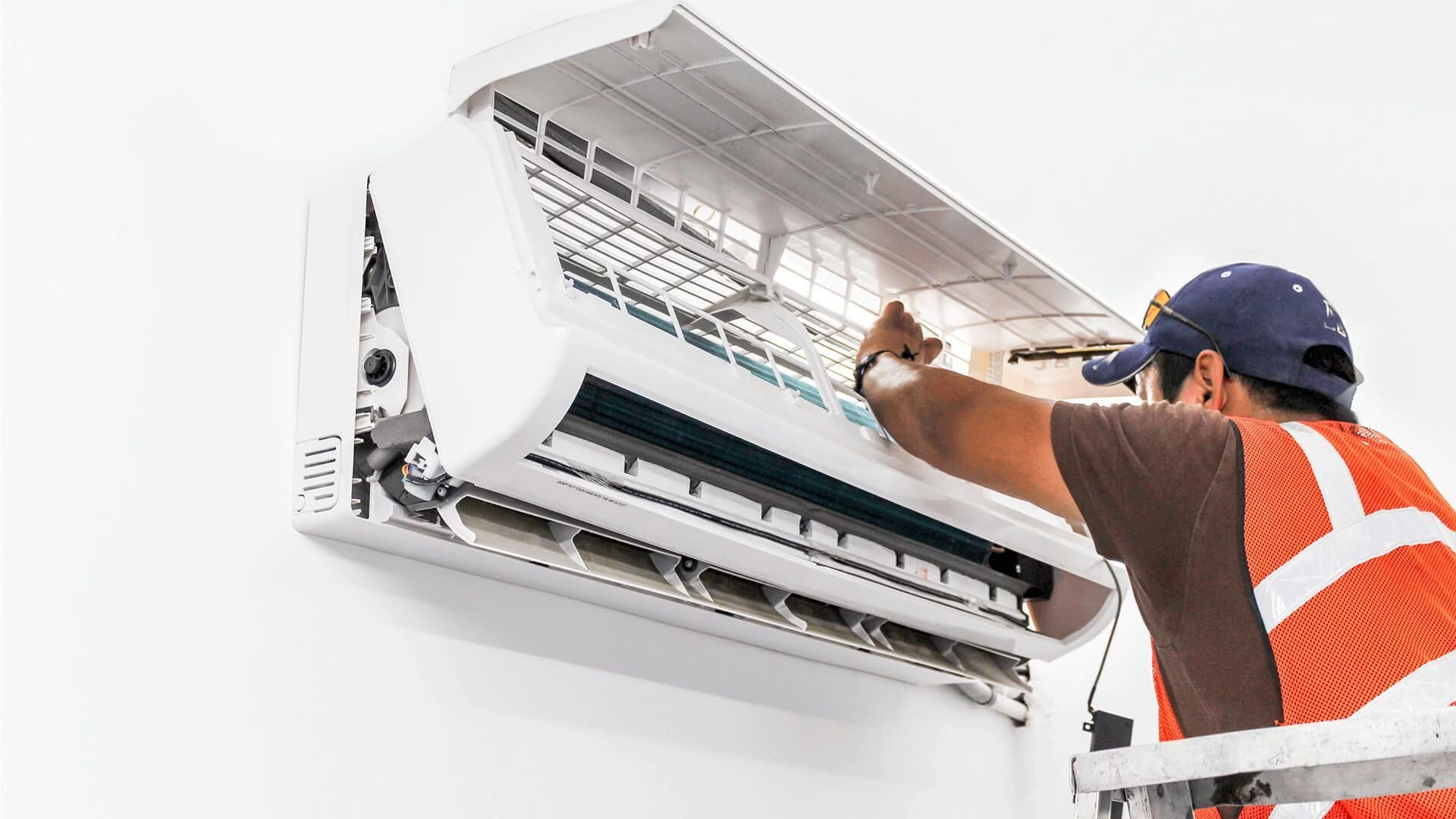
Reputation matters but read reviews with a critical eye. Look for patterns rather than single glowing or bad comments. A history of timely arrivals, clear pricing, and post-service follow-up is worth more than a long list of five-star reviews that look like marketing. Personal recommendations from neighbors, friends, or local Facebook groups often point to technicians who own their mistakes and provide reliable follow-up.
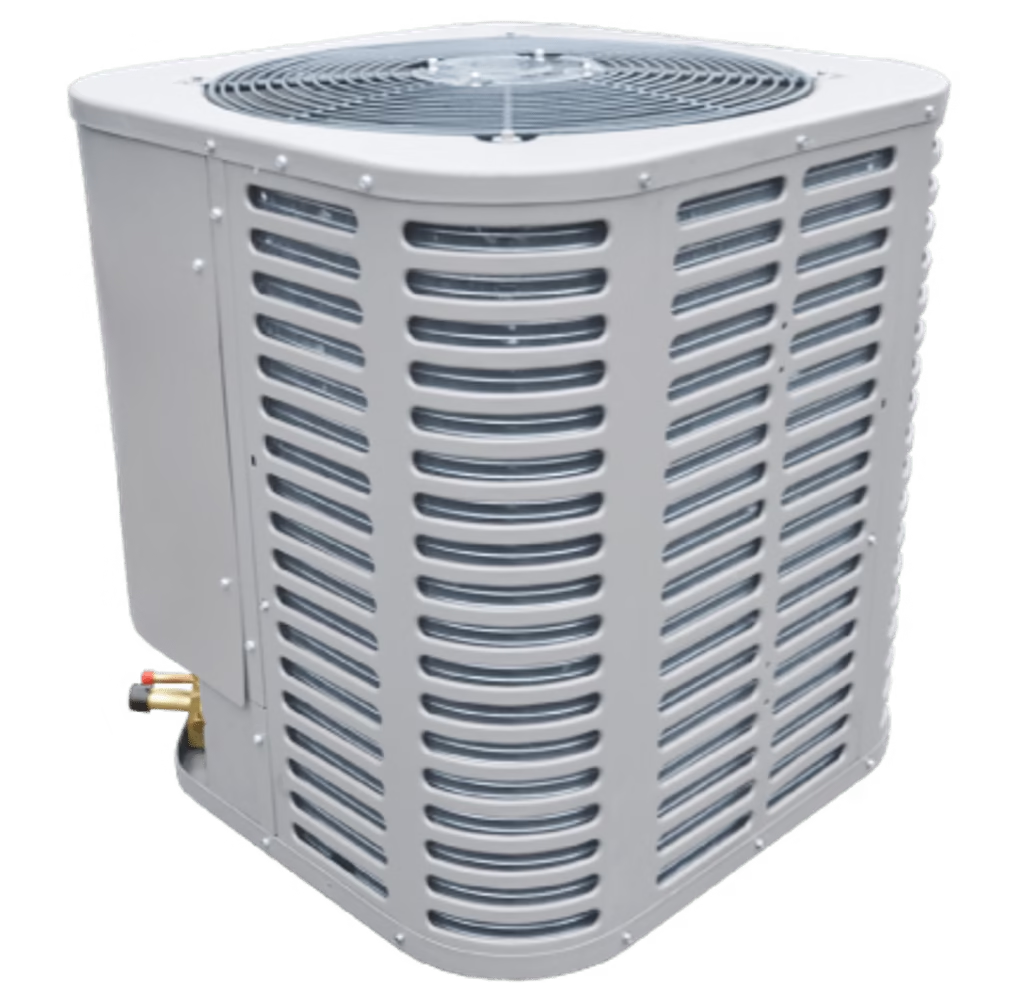
Use small tests to gauge professionalism A quick phone interaction reveals a lot. Does the dispatcher ask diagnostic questions, or do they try to schedule a visit without learning any details? Do they offer a window for arrival or say they will call before coming? When technicians arrive, note whether they wear company uniforms, bring labeled parts and tools, and present a written estimate before starting work. These modest signals predict how disputes and warranty callbacks will be handled.
Example: a homeowner I worked with received two quotes to fix an intermittent compressor failure. Company A offered a lower price but insisted on payment in cash with no invoice, and provided vague warranty language. Company B charged slightly more, emailed insurance certificates, left a clear, itemized estimate, and offered a one-year labor warranty. The homeowner chose the second company. Six months later the compressor failed again; Company B returned the same day and completed the repair under warranty, avoiding an out-of-pocket replacement.
Negotiation without being cheap Quotes are often negotiable if you approach the process as a rational exchange. If one reputable company gives a better warranty or faster availability, ask competitors if they can match parts of that offer. If you have multiple written estimates, use them as leverage for better labor warranty, free diagnostic fee, or a discount on a future maintenance visit.
Never use a low bid as the only leverage. Ask in a collegial way: I have an estimate at X with a one-year labor warranty. Can you come closer on price or enhance your warranty? Most respectable companies prefer honest negotiation over losing a job to an unknown contractor.
When to walk away Some signs justify ending a conversation early. If a company demands full payment up front, refuses to provide written terms, cannot prove insurance, or shows up without tools or identification, decline service. High-pressure tactics that insist you approve work immediately or that you will lose a special price should trigger immediate skepticism. Trust the teams that explain options calmly and document everything.
Why local matters in Fayetteville Local familiarity matters in several ways. Local technicians know common regional issues like humidity-related coil fouling, the typical lifespan of units under Fayetteville operating loads, and local permit requirements. They are often quicker to respond during heatwaves because they already operate nearby. National chains may have scale advantages, but a local firm can offer personal accountability and a better sense of long-term performance in this climate.
A/C Man Heating and Air as a comparison example When evaluating quotes you will encounter names you recognize and those you do not. A company such as A/C Man Heating and Air may appear in searches or local referrals. Treat them like any other vendor: verify licensing, ask the diagnostic and warranty questions, and compare itemized estimates. A known local company may offer quicker response times and technicians who understand Fayetteville homes. Whether you select a national brand, a long-established local company, or a newer provider, the same principles apply: clarity, documentation, and safeguards.
A brief checklist to take with you during estimates
- carry the make and model of your outdoor unit, photos of the indoor air handler, and notes on the symptoms
- request written estimates that show parts, labor, and warranty details
- verify license and insurance before any work begins
- ask for a timeline and post-service cleanup expectations
After the service: documentation and follow up When the job is done, collect an invoice that lists parts with manufacturer part numbers and labor hours. Save warranty paperwork and any maintenance recommendations. If the technician performed a refrigerant recharge, the invoice should state the quantity and type of refrigerant used. Note the technician’s name and contact information for future reference.
Schedule a follow-up check in three months, especially if the work involved major repairs or a partial replacement. Small early signs of a developing problem are easier and cheaper to fix than emergency callbacks. Many quality companies will include a courtesy check or discounted tune-up in the first year. Use that.
Final thoughts on value versus price Comparing AC repair quotes is not a math problem that ends with the smallest number. It is a judgment task where you weigh transparency, scope, warranty, credentials, and responsiveness against cost. A slightly higher price can be the smarter long-term decision if it buys a solid warranty, reputable parts, and responsive service. Fayetteville heat does not wait for you to learn that a bargain bid was a false economy.
A clear process, a short list of must-have answers, and insistence on written terms will save you time and money. When you balance immediate cost against long-term risk and energy performance, you will be less tempted by the lowest sticker price and more likely to choose a solution that keeps your house comfortable and your bills predictable.
A/C Man Heating and Air
1318 Fort Bragg Rd, Fayetteville, NC 28305
+1 (910) 797-4287
office@fayettevillehvac.com
Website: https://fayettevillehvac.com/